Technology · NEWS EXPLAINER
Android adds new scam defenses: what changes in Messages, screen sharing and calls
Google is rolling out an opt-in enhanced scam detector in Messages, broader notification alerts, Android 15+ screen-share masking and call-forwarding defenses. The features arrive on different schedules and not on every device.
Google announced a new group of Android scam protections on October 14. The practical change is not one universal switch: Messages analysis, unfamiliar-link checks, notification warnings, screen-share masking and call-forwarding controls have different eligibility rules and rollout dates.
The update is a bundle, not one switch
Google grouped several anti-scam changes under one announcement, but each protects a different path. Messages gets an optional enhanced mode, some devices get on-device checks for unfamiliar links, partner phones receive broader chat-notification warnings, and Android 15+ begins hiding sensitive fields during screen sharing. A separate call-forwarding defense starts later. Users should therefore check the exact feature, Android version, phone model and country instead of assuming every protection arrives together.
What Enhanced protection in Messages does
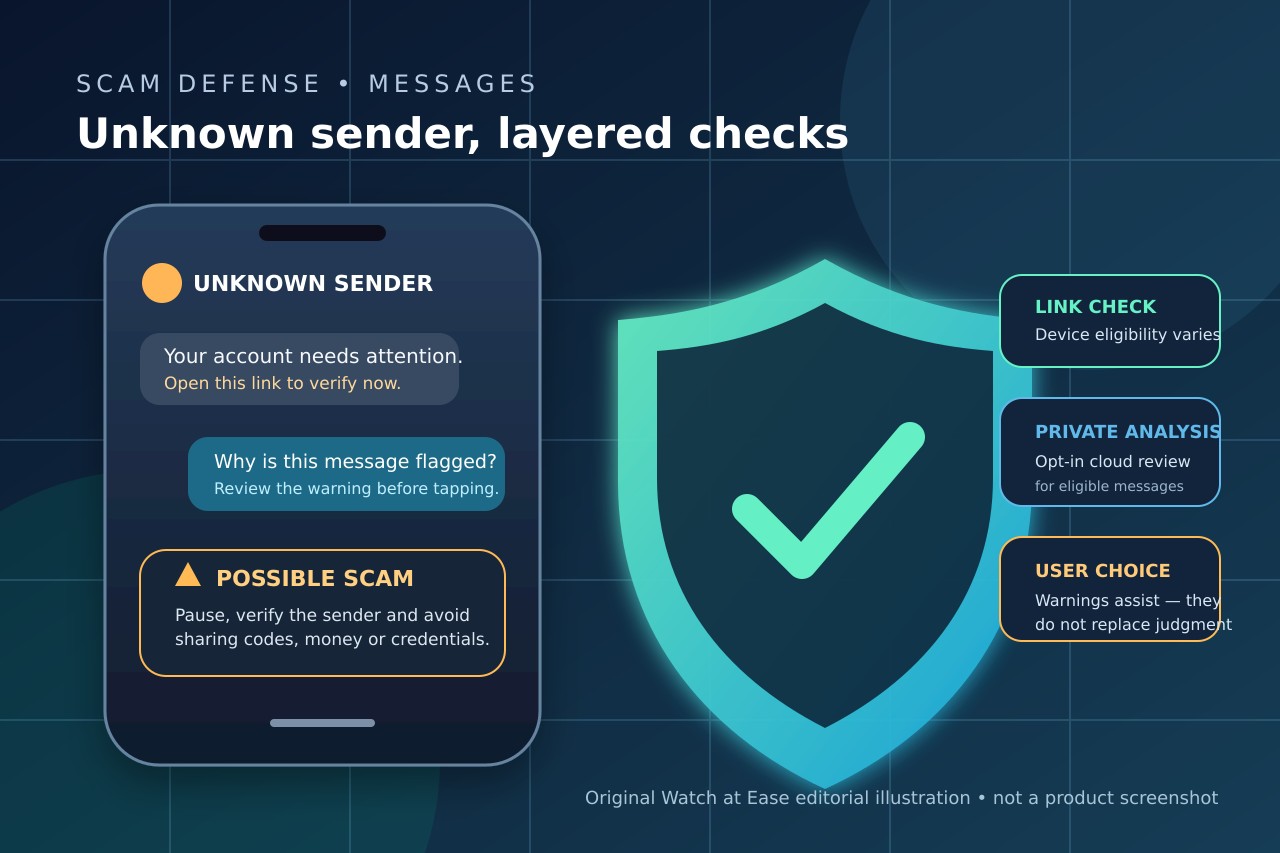
Enhanced protection is an opt-in Google Messages setting for conversations from unknown senders. Google says it uses Gemini through Private AI Compute to inspect conversation context and identify more sophisticated scams. The company says data sent for this analysis is encrypted and is not accessible to Google, including through the cloud environment. That is Google’s privacy claim; this announcement is not an independent technical audit. The setting is expected to begin rolling out in the coming weeks.
Link and notification checks have narrower eligibility
Google also describes an unfamiliar-link check that runs with Gemini Nano on the device. Its footnotes limit that feature to selected newer devices, so it should not be described as available across Android. Separately, scam alerts for chat notifications are expanding to hundreds of millions of people across participating manufacturers later in 2026. The two features use different paths: one evaluates links within eligible conversations, while the other warns about risky chat notifications from supported apps and phones.
Screen sharing will hide sensitive fields
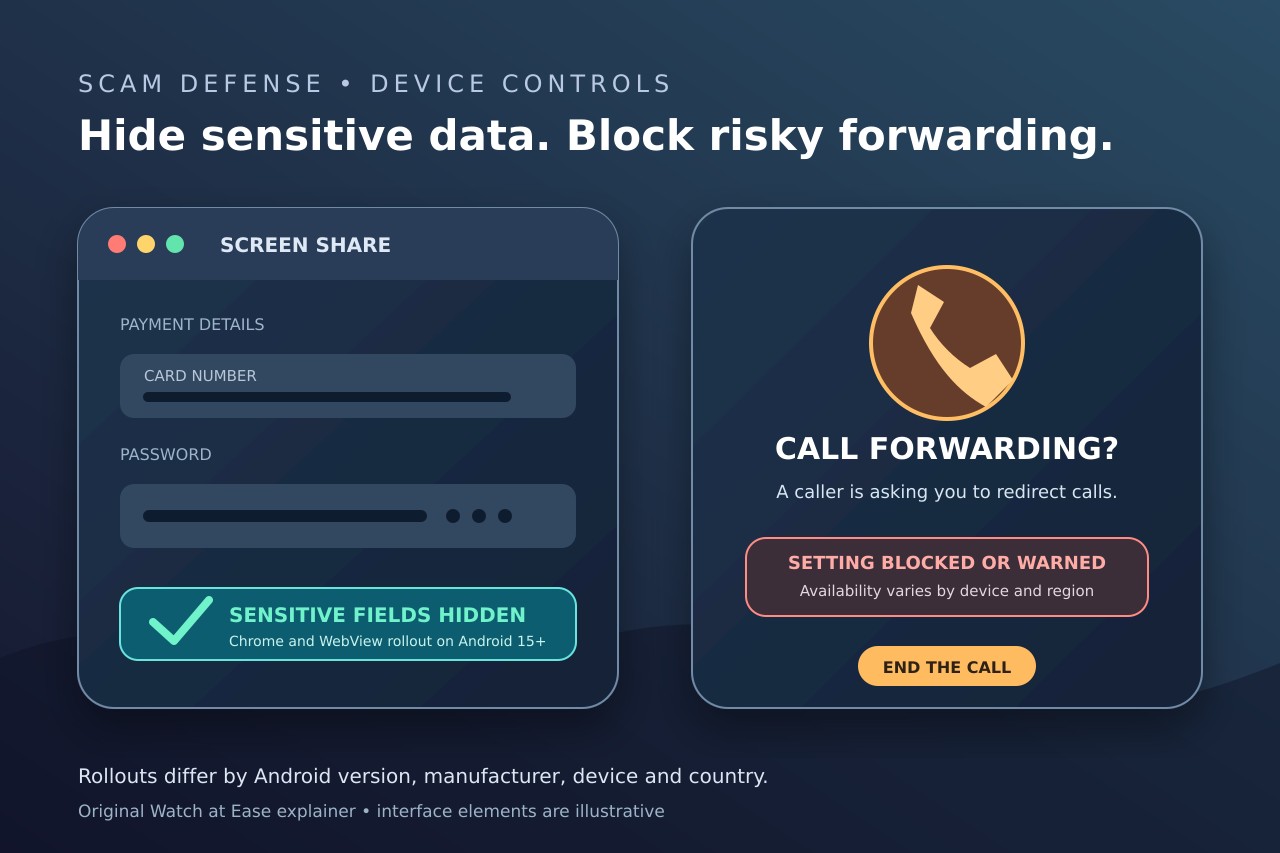
Starting this month, Android 15 and later will automatically conceal sensitive fields such as passwords and payment details when users share their screen through Chrome or an app built with WebView. This reduces accidental exposure during a remote-support scam, but it is not a reason to keep following a suspicious caller’s instructions. Ending the call, contacting the organization through a trusted number and never sharing a one-time code remain the safer response.
Call-forwarding protection starts later
Beginning in early December, Pixel and select Android devices will block or warn about attempts to enable call forwarding while a call is active. Scammers use forwarding to intercept calls or account-recovery steps, so the intervention targets a high-risk moment. Availability varies by device, manufacturer and region. Treat an unexpected request to dial a forwarding code, change phone settings, move money or reveal credentials as a reason to stop and verify independently.