Technology · NEWS EXPLAINER
Amazon backs Calvert Cliffs nuclear upgrade: what the 690 MW deal means
Amazon and Constellation signed a 20-year power agreement tied to Maryland’s Calvert Cliffs nuclear plant. It covers 690 MW, supports a 190 MW uprate and more than $3 billion of investment, while the electricity continues to flow through the regional grid.
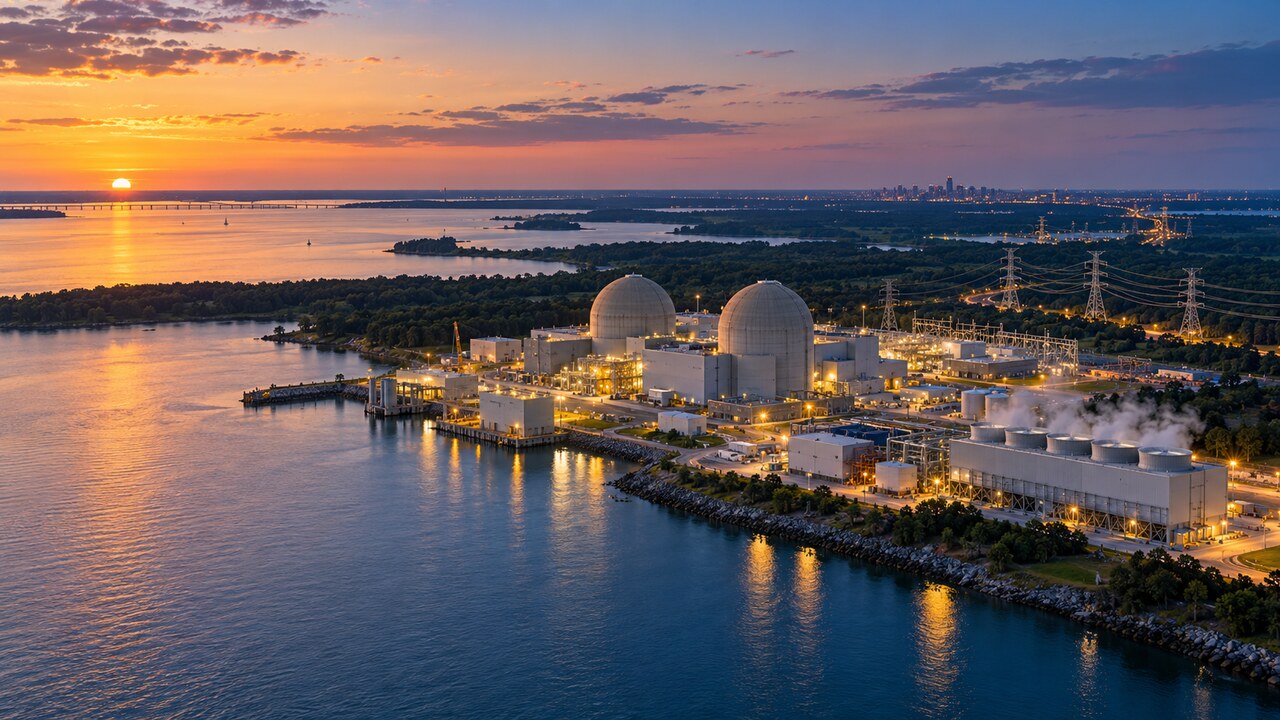
Amazon and Constellation Energy have signed a 20-year power purchase agreement that gives the utility long-term revenue support for upgrades at the Calvert Cliffs Clean Energy Center in Maryland. The companies say the agreement can enable more than $3 billion of infrastructure investment and add about 190 megawatts of generating capacity between 2030 and 2032.
The contract covers 690 megawatts in total from the existing 1,790-megawatt plant. That does not mean 690 megawatts of new generation, and it does not create a private power line from the reactors to an Amazon campus: all electricity produced at Calvert Cliffs will continue to enter the PJM regional grid.
The commercial agreement is important, but it is not the same as a completed upgrade or a renewed operating license. Engineering work, regulatory reviews and execution still stand between the announcement and the additional capacity, while a separate license-renewal process would be needed to keep the two reactors operating beyond 2034 and 2036.
690 MW is the contract; 190 MW is the planned increase
The two numbers answer different questions. The 690-megawatt figure is the amount covered by the long-term commercial agreement. The roughly 190-megawatt figure is the extra output Constellation plans to obtain through upgrades to the two existing reactors.
Constellation says the additional capacity would come online between 2030 and 2032. If the plan is completed, the site’s generating capacity would rise from about 1,790 megawatts to about 1,980 megawatts.
The more than $3 billion figure describes infrastructure investment enabled by the agreement, not a disclosed purchase price paid directly to Constellation. Reuters and Maryland Matters both reported that the contract’s detailed financial terms remain private.
The power still goes to the shared PJM grid
Calvert Cliffs will keep delivering all of its output to PJM, the regional power market and transmission system serving all or parts of 13 states and Washington, D.C. The agreement therefore supports supply available to the wider grid rather than reserving a physical stream of electricity for a single data center.
Amazon and Constellation also entered a related retail-supply agreement for Amazon operations in the PJM region. That arrangement can give Amazon longer-term cost and supply certainty while the underlying electrons remain part of the shared grid.
This distinction matters because Amazon abandoned an earlier concept for a hyperscale data-center campus at the Calvert Cliffs site. The new agreement is a market-based power contract, not an announcement that the canceled campus is returning.
What must happen before the extra capacity arrives
Constellation must carry out plant-wide improvements and reactor uprates before the extra 190 megawatts can be produced. The 2030-to-2032 window is a company plan, not a promise that every milestone has already been approved or completed.
The deal also gives Constellation revenue certainty as it considers a second 20-year operating-license renewal. Unit 1 is currently licensed through 2034 and Unit 2 through 2036, according to the background summarized by World Nuclear News.
A power contract does not itself renew a nuclear license. Any extension remains subject to the Nuclear Regulatory Commission process, and readers should treat future advanced-reactor development at the site as an option under study rather than a committed project.
Why the agreement matters beyond one company
Large technology companies are looking for round-the-clock electricity as data-center demand grows. Long contracts can reduce market uncertainty for an existing generator and help finance upgrades that might otherwise be difficult to justify.
For Maryland, the immediate public-interest question is whether the promised investment and additional capacity are delivered on schedule while the shared grid remains reliable. For Amazon, the agreement is a way to support carbon-free supply in the region and manage long-term energy exposure.
The clearest way to track the deal is to separate signed commitments from future steps: 690 megawatts are contracted, roughly 190 megawatts are planned additions, and relicensing and any new reactor project still require separate decisions and review.