Travel · NEWS EXPLAINER
NTSB report details missing wind call before fatal Amazon cargo crash
The preliminary report documents a missing wind advisory, an unusually fast and late touchdown, a brief go-around attempt and unused deceleration systems before 21 Air Flight 7598 overran a Miami runway. Investigators have not determined probable cause, and the findings remain subject to change.
The National Transportation Safety Board has released its preliminary report on the September 6 runway overrun of 21 Air Flight 7598 at Miami International Airport. The Boeing 767 freighter was carrying cargo for Amazon from San Juan when it ran beyond Runway 30 and hit two ground vehicles. Five people on the ground died, three were seriously injured and the two pilots sustained minor injuries.
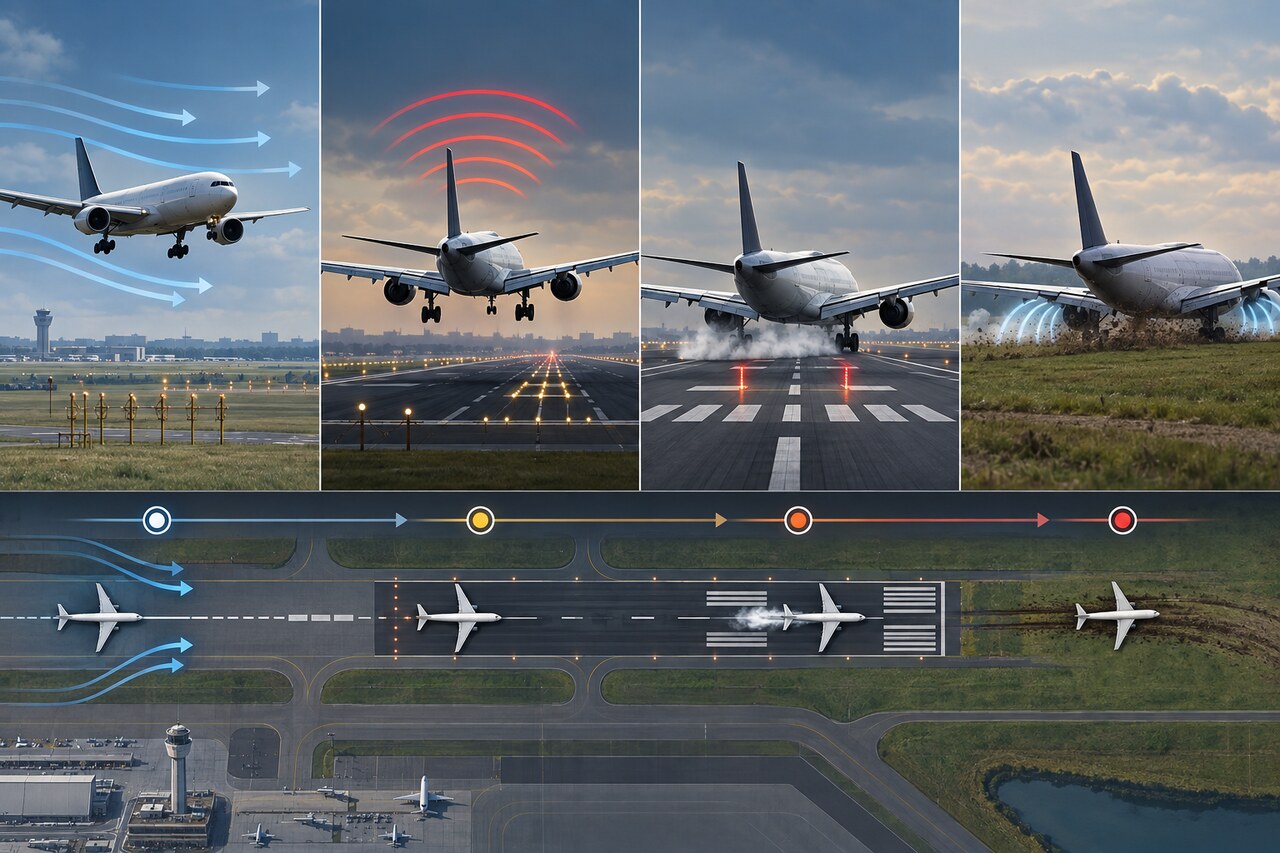
The new report adds a detailed sequence from air-traffic-control communications, the cockpit voice recorder and the flight data recorder. It documents several serious conditions before and after touchdown: the crew did not receive current wind information with its landing clearance, one pilot repeatedly warned that the aircraft was too fast, the jet touched down far along the runway, and recorded data did not show deployment of the speed brakes or thrust reversers.
Those facts do not amount to a final cause. The NTSB labels the information preliminary and subject to change, lists the investigation as ongoing and has not issued findings or recommendations. The evidence is best read as a chain investigators will test, not as proof that any one omission or decision by itself caused the crash.
The wind information was not passed to Flight 7598
About four minutes before the 21 Air landing clearance, another flight asked the controller for wind information. The controller reported wind from 190 degrees at 19 knots, gusting to 22 knots. Flight 7598 was not on that radio frequency at the time.
According to the preliminary report, the controller later cleared Flight 7598 to land but did not provide the wind direction and speed. AP reported that federal rules require both when a runway has a tailwind component. A tailwind can raise groundspeed and increase the runway distance needed to stop, but the preliminary report does not say that the missing call alone caused the overrun.
That distinction matters. The controller communication is one recorded fact. Investigators still need to evaluate the crew's weather information, company procedures, aircraft performance, decisions on the approach and the interactions among all of those elements.
Recorder data show a fast approach and a late touchdown
The cockpit recording summary says one pilot cautioned that the airplane was too fast about a minute and 42 seconds before the recording ended, and continued to raise the speed issue. The NTSB says there was not a consistent verbal response. Automated calls included repeated 'sink rate' and 'too low terrain' warnings before touchdown.
Flight-recorder data place the first recorded touchdown of the nose and right main gear at a groundspeed of 158 knots. Reuters, citing the report, said the aircraft touched down about 3,750 feet from the start of the runway at roughly 160 knots, or 184 mph. Landing farther down a runway leaves less pavement available for braking.
The pilots had flown two earlier legs that day, and the preliminary report says this was their first day flying together. Those details may help investigators reconstruct workload and crew coordination, but they should not be treated as causal findings before the NTSB completes its analysis.
The stop-and-go-around sequence lasted only seconds
The flight data recorder shows brakes were applied at 146 knots. At 120 knots, they were released and the throttles moved to a value consistent with go-around thrust. Four seconds later the throttles returned to idle and the brakes were applied again at 117 knots.
The final recorded sequence shows abrupt acceleration changes as the aircraft left the paved surface. The NTSB says the data contained no indication that the speed brakes or thrust reversers deployed. The airplane ultimately ran about 1,200 feet beyond the runway, struck airport equipment and the occupied vehicles, and suffered substantial damage and a post-crash fire.
A late go-around command appears in the cockpit summary roughly 16 seconds after touchdown. The report does not yet explain why the attempted maneuver was started, abandoned, or why the deceleration systems did not deploy. Those are questions for the continuing investigation, not gaps that should be filled with speculation.
What the preliminary report does — and does not — settle
The document establishes a recorded timeline and identifies evidence investigators are examining. It does not assign fault, determine probable cause or issue safety recommendations. Technical groups will still analyze performance, operations, air-traffic control, human factors and organizational oversight before the board adopts a final report.
Amazon has paused its use of 21 Air and told Reuters it remains committed to supporting the investigation. 21 Air said it is reviewing the preliminary report and its own safety protocols and will take appropriate action as facts are established. Those company responses are not substitutes for the NTSB's conclusions.
For readers following the case, the next meaningful milestones are factual: additional docket material, any urgent NTSB or FAA safety action, and eventually the final probable-cause report and recommendations. Until then, the responsible summary is that multiple recorded hazards and actions preceded the crash, while the cause remains undetermined.