Technology · NEWS EXPLAINER
Amazon’s Bee Frontier and Eclipse listen all day — what $75, $100 and the $12 subscription actually buy
Frontier is available now, Eclipse is only promised soon, and Amazon’s claim that raw audio is deleted does not mean the system keeps no conversational data.
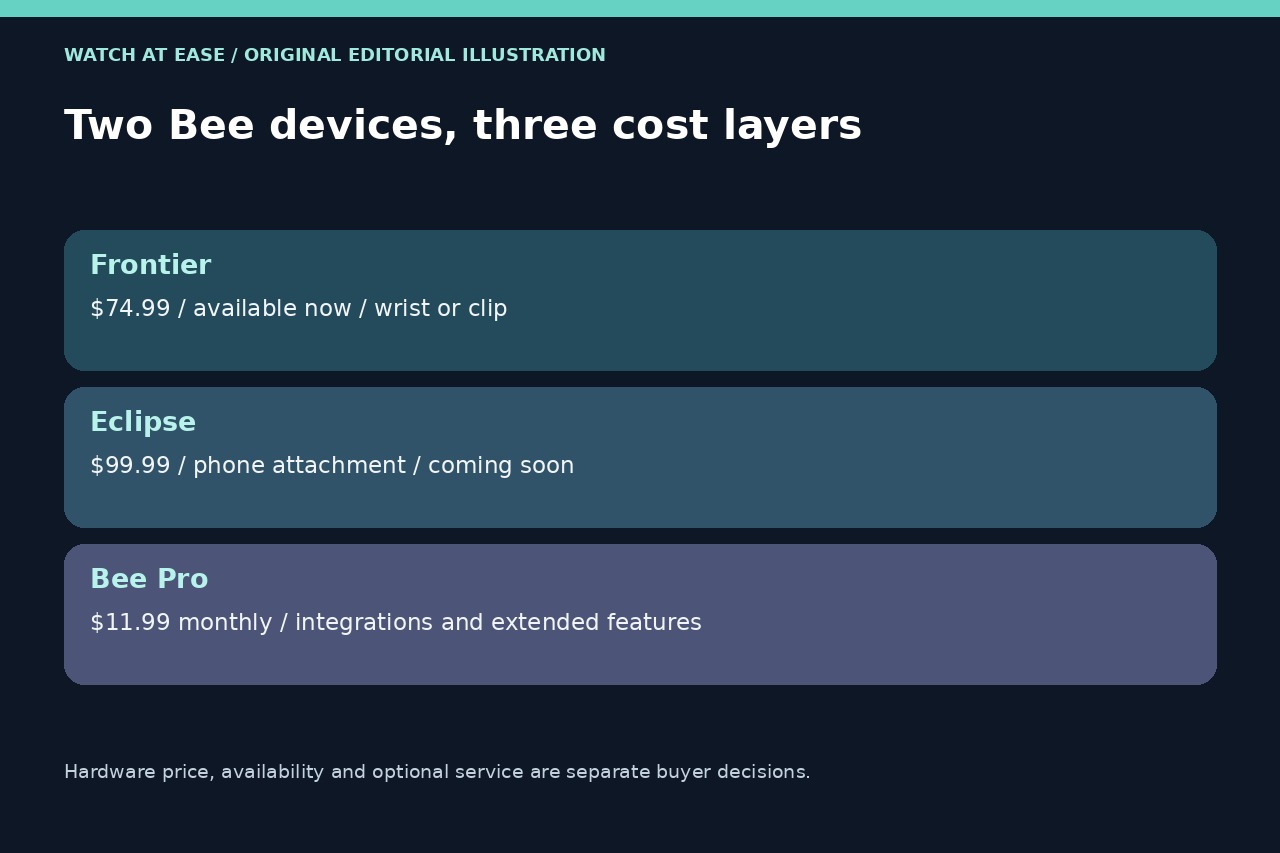
Amazon introduced two Bee personal-AI devices on October 15. The $74.99 Frontier can be worn on a wrist or clipped to clothing and is available now. The $99.99 Eclipse is a credit-card-sized magnetic phone attachment with more than 21 days of battery life, but Amazon only says it is coming soon.
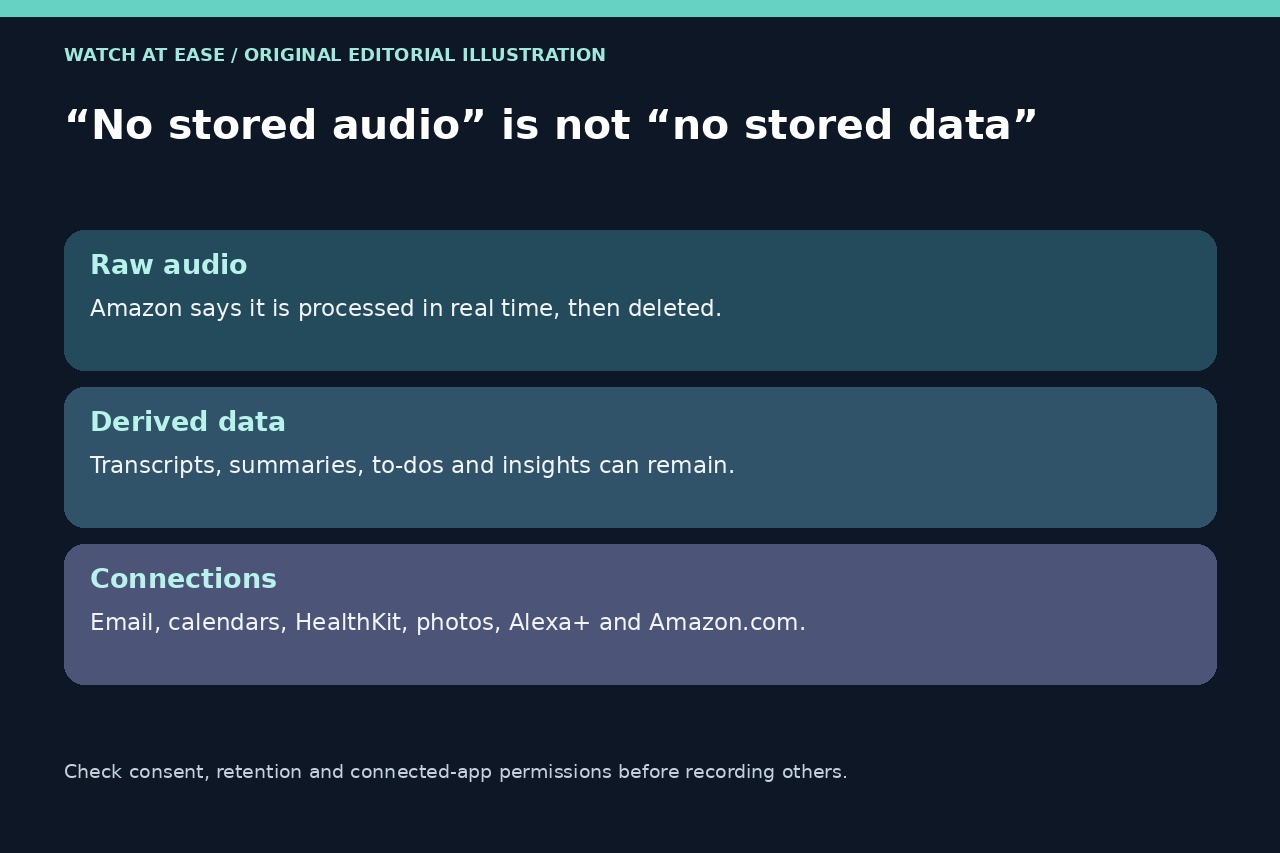
Both devices process conversations into transcripts, summaries, reminders and suggested actions. Amazon says raw audio is processed in real time and deleted, while encrypted transcripts and derived information remain available to the user. That distinction matters more than the shorthand description ‘always listening.’
The free tier includes summaries, recaps and 14 days of memory. Bee Pro costs $11.99 a month and adds extended summaries, an assistant, templates and integrations with third-party apps, Alexa+ and Amazon.com. Buyers should separate hardware cost, continuing service cost, connected-account access and consent from other speakers.
Two devices, different availability
Frontier is a wristband or clip with dual microphones, IP67 resistance, a visible indicator and up to seven days of battery. It went on sale October 15 in three colors.
Eclipse attaches magnetically to a phone and has a larger battery rated for more than 21 days. Amazon lists a $99.99 starting price but gives no date beyond ‘coming soon,’ so it should not be described as available today.
The subscription changes the product
Without paying monthly, owners receive conversation summaries, recaps and 14 days of memory. That is enough to use the basic note-taking function, but it places a time limit on the free history.
Bee Pro costs $11.99 per month after a 30-day trial for new customers. It adds unlimited recent summaries, suggested to-dos, daily memories, templates, a personal assistant, desktop access and integrations with Amazon.com, Alexa+ and third-party apps.
No stored audio is not no stored data
Amazon says audio is processed in real time and deleted, and that device-controlled keys encrypt transcripts. The company also says users can delete transcripts and summaries and no one else can access them unless the user shares them.
The useful output is still derived conversational data: transcripts, summaries, reminders and actions. Connecting Gmail, Google Calendar, Outlook, HealthKit, photos, Alexa+ or Amazon.com expands the data surface and can allow email drafts, calendar invites, wellness context or shopping recommendations.
Four checks before carrying one
First, confirm the visible light and microphone button behave as expected. Second, review retention settings and what changes when a Pro plan ends. Third, audit every connected account and whether shopping suggestions are enabled.
Finally, obtain permission from other people and follow applicable workplace, school and local recording rules. An indicator light and a product privacy claim do not by themselves settle consent for every conversation. This is a practical checklist, not legal advice or an independent security audit.