Technology · NEWS EXPLAINER
AI pricing is spreading in retail—but digital shelf labels are not the same as personalized prices
A new AP review maps the technologies behind retailer pricing anxiety. Dynamic pricing, electronic shelf labels and personal-data pricing can overlap, but one does not prove the others.
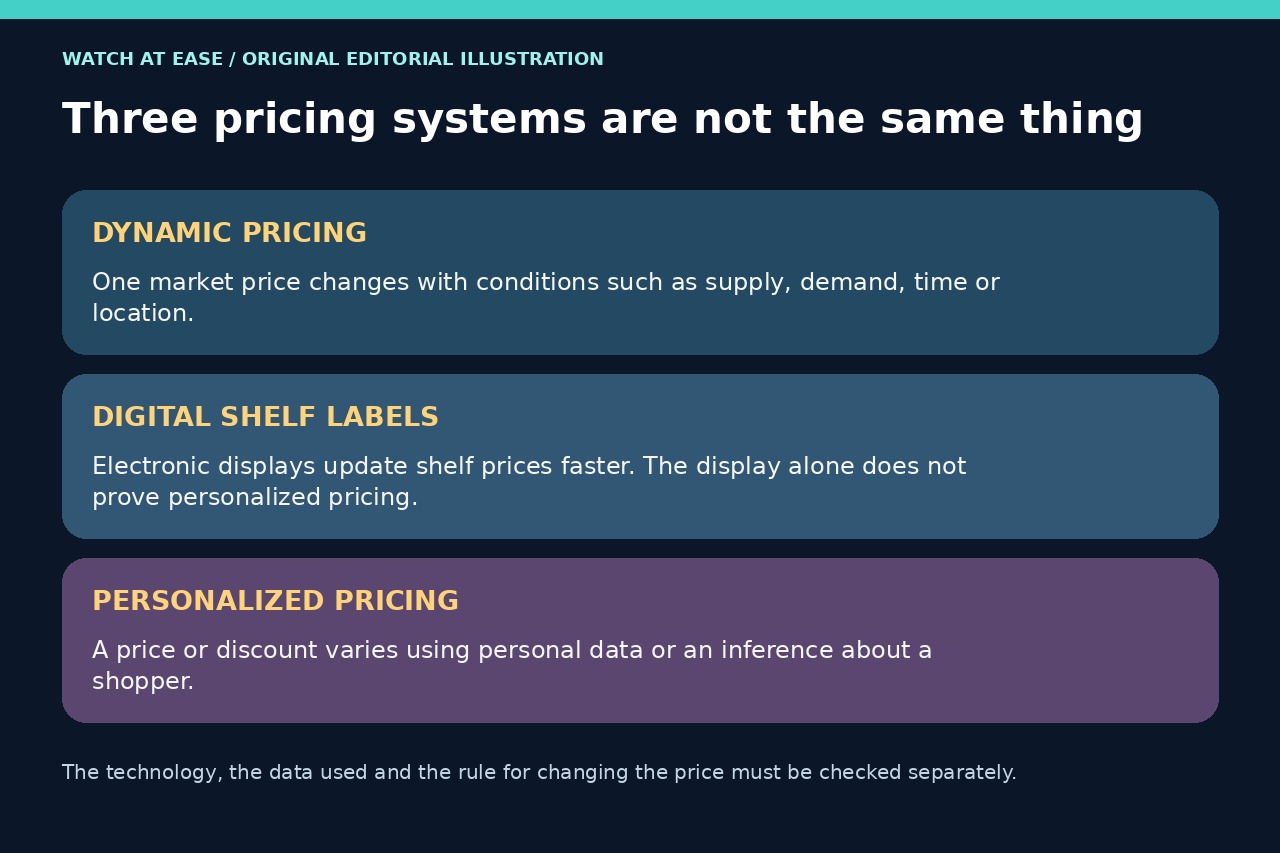
U.S. retailers are using more digital labels and AI-assisted pricing tools, while consumers and regulators ask what data shapes the price they see. The important distinction is between a faster display, a market-wide price change and a price personalized with shopper data.
Three technologies are being collapsed into one fear
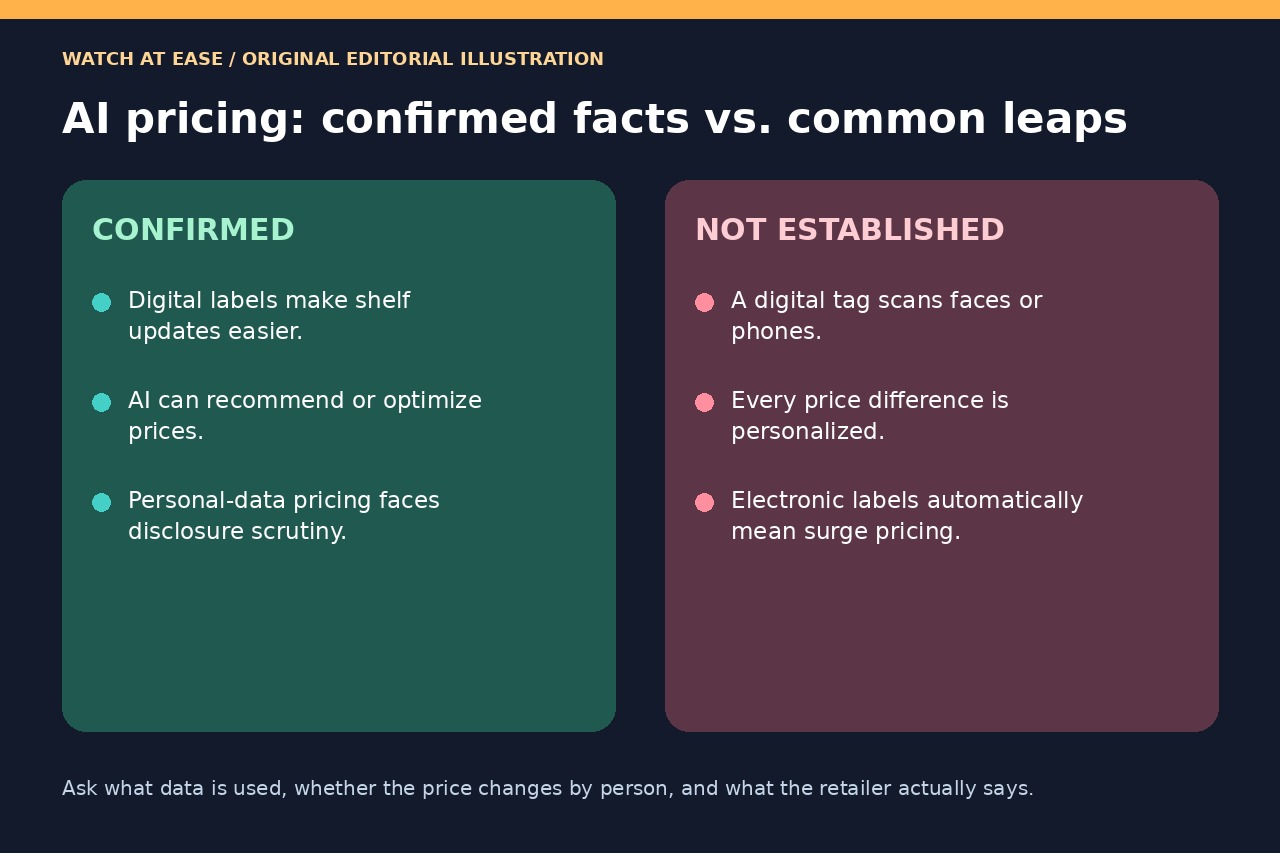
Digital shelf labels replace paper tags and make price updates quicker. Dynamic pricing changes a market price as supply, demand, time or location changes. Personalized pricing changes a price or discount using information about an individual or a shopper group. AP’s October 18 review says these practices can be supported by the same software ecosystem, but the presence of an electronic tag does not establish that a store is scanning a face, reading a phone or charging each shopper a different amount.
What electronic shelf labels actually establish
Electronic labels let a retailer update displayed prices without replacing paper tags by hand. That capability can support more frequent changes, yet AP cites retail-technology and academic evidence that intra-day surge pricing remains rare in grocery and general merchandise. The right question is what rule triggers an update and whether everyone at that store sees the same price—not whether the label uses a screen.
Personal-data pricing is the regulatory fault line
The FTC’s proposed policy says businesses should clearly disclose personalized pricing, its basis and the types of data used when consumers reasonably expect a common price. The agency also says Congress has not authorized a blanket ban in every circumstance. Ordinary variation by taxes, regulation, local costs or market conditions is not automatically personal-data pricing; the decisive issue is whether information about the shopper changes the offer.
What retailers confirm—and what remains uncertain
Target told Reuters that it does not raise prices based on a shopper’s identity or location and does not adjust them by time of day or high demand. It said prices may differ by local cost, regulation, competition, channel or discounts, while customers on the same platform or in the same location see the same price. Walmart has issued a similar denial. Those statements do not show that AI pricing is absent across retail, and AP says the overall prevalence of personalized pricing remains unclear.
A practical way to read a changing price
First compare the same item, seller, store or platform, time and promotion. Then check whether the retailer explains a local or channel difference. If two shoppers in the same context receive different base prices, ask whether loyalty status, browsing history, location or another personal signal was used. A digital label or an AI recommendation alone is not proof; a clear disclosure, a controlled comparison or a regulator’s finding is stronger evidence.